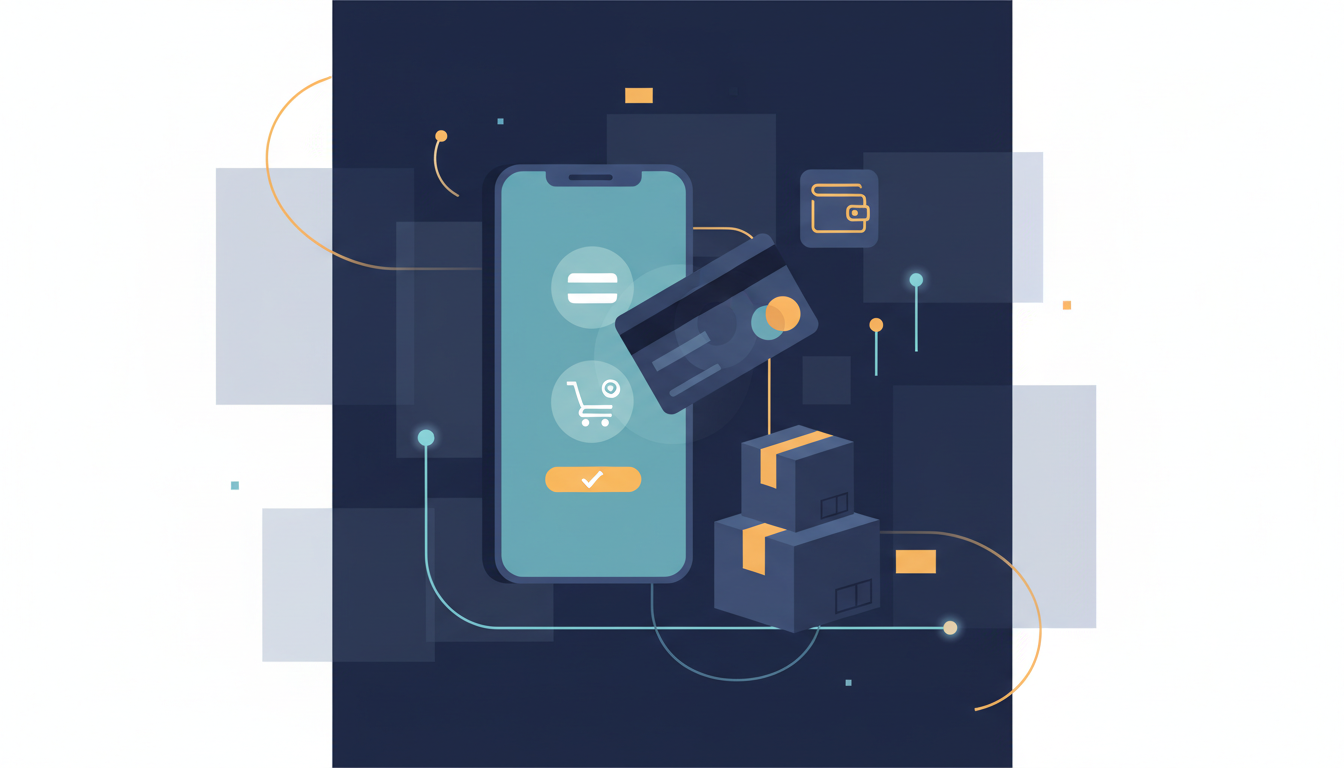
A payment gateway is the service that takes a customer's money online and tells your system whether the payment succeeded. For a business in Egypt, a single gateway rarely covers everything. Customers pay by bank card, by mobile wallet, or in cash when the order arrives. The practical choice is which combination to offer, and then how your software records each payment so that orders, stock, invoices and accounts stay correct.
What a payment gateway actually does
A gateway sits between your checkout and the payment networks or wallet providers. It receives the payment request, passes it to the customer's bank or wallet, and returns a result: approved, declined, pending or refunded. Your software then has to act on that result. It should reserve or release stock, issue an invoice, send a receipt and update the customer's balance.
Most of the work is not the checkout button. It is the event handling behind it: confirming payments that arrive late, ignoring duplicate notifications and matching every transaction to one order.
Payment gateway options in Egypt
Cards
Card payments suit online stores selling higher-value goods, subscriptions and digital products that must be delivered instantly. Customers expect them, and they make recurring billing possible. The trade-offs are onboarding time with the provider, a fee on each transaction, and the need to handle chargebacks and refunds properly.
Mobile wallets
Mobile wallets are widely used by customers who do not want to share card details online or who do not hold a card. Wallet payments often involve a confirmation step on the customer's phone, which can leave the order in a pending state for a short time. Your system must treat pending as a real status, not as failed or paid.
Cash on delivery
Cash on delivery (COD) remains a common option for consumer goods and for buyers who want to inspect the product first. It has no gateway step at checkout, but it adds work after delivery: driver collections, returns, and reconciling cash handed in at the end of the day against the orders assigned to each driver.
Comparison: what each method asks of your software
| Method | Best for | Main risk | What your software must record |
|---|---|---|---|
| Cards | Higher-value goods, subscriptions, instant digital delivery | Chargebacks and failed retries | Gateway transaction ID, authorisation status, refunds, chargeback status |
| Mobile wallets | Customers without cards, mobile-first buyers | Payments stuck in pending | Pending and confirmed states, timeout rules, late confirmations |
| Cash on delivery | Physical goods, buyers who prefer to pay on receipt | Cash not matched to orders | Driver assignment, amount collected, returns, daily cash settlement |
Decisions to make before you choose a provider
- Which payment mix do your customers actually use? Check your current orders or ask your sales team. Offering a method no one uses adds integration cost without revenue.
- Where does the money settle, and when? Settlement timing affects your cash flow. Ask every provider for the payout schedule in writing.
- How are refunds issued? Some gateways allow refunds only from their dashboard. If your team must refund inside your own system, the integration needs to support it.
- Which system is the source of truth? Usually the order system holds the status and the gateway holds the transaction record. Decide this before you write code.
- Who reconciles the money? Someone must match gateway reports, wallet reports and cash collections to invoices every day or week.
Where payment integrations break in production
Most problems appear after launch, not during testing. The common ones are:
- Duplicate notifications. A gateway may send the same success event twice. Without an idempotency check, the customer is charged once but the order is fulfilled or invoiced twice.
- Late confirmations. A wallet payment confirmed after your timeout may leave a paid customer with a cancelled order.
- Partial refunds. Refunding part of an order must update stock, invoices and the customer balance together.
- Cash that never reaches the ledger. If COD payments are entered by hand days later, the accounts will not match the bank.
- Currency and rounding. Amounts stored as decimals in the wrong type can drift by small amounts across thousands of orders.
Each of these is preventable with a clear state model, logged webhook events and a daily reconciliation report. Treat them as acceptance criteria in your requirements document rather than as later fixes.
How we approach payments on client projects
On our GameCard digital goods store, payments had to cover local and card options alongside instant code delivery, so the order status and delivery step were designed together. On the Arabic Learning Platform, online payments were tied to course access, so a student only gets content after a confirmed payment. For studio bookings, invoices are issued in Egyptian pounds and linked to deposits, which is covered in our ERP work when payments must flow into accounting.
If your business sells online and also takes cash in a shop, the POS and accounting side matters as much as the checkout. Our POS subscription and ERP modules are built to keep those channels in one ledger. When you are ready to scope the work, request a consultation and we will map your payment mix against your order flow.
Frequently asked questions
Do I need more than one payment gateway in Egypt?
Many businesses do. Customers differ in how they pay, and offering only cards can lose orders from buyers without a card. Start with the methods your customers already use, and add others once the first integration is stable.
Can cash on delivery be tracked in an ERP system?
Yes. Record the amount due on each order, the driver assigned, the amount collected and any returns. A daily settlement report then shows which orders were paid in cash and which cash is still outstanding.
How long does a payment gateway integration take?
The provider's onboarding can take days or weeks, depending on documents. The software work for a single gateway with refunds and reconciliation usually takes a few weeks of build and testing, and the exact time depends on your order flow.
What should I check before going live with a new gateway?
Test successful, failed, pending and refunded payments in a sandbox. Confirm that duplicate events do not create duplicate orders, and run one full day of reconciliation against the provider's report before you rely on it.